

DECIPHER
Deciphering Early Carcinogenesis in Lynch Syndrome to Develop Personalized Preventive Medicine for Lynch Syndrome
Lynch syndrome is the most common hereditary cancer syndrome, caused by pathogenic germline variants in DNA mismatch repair (MMR) genes. Despite major advances in understanding MMR-deficient cancers, the earliest events initiating carcinogenesis remain poorly characterized. In particular, the molecular mechanisms governing the emergence, persistence and malignant transformation of MMR-deficient precancerous lesions are not fully understood.
DECIPHER aims to unravel the molecular, cellular and spatial mechanisms underlying the earliest stages of Lynch syndrome-associated carcinogenesis, with the ultimate goal of developing novel strategies for personalized cancer prevention and interception.
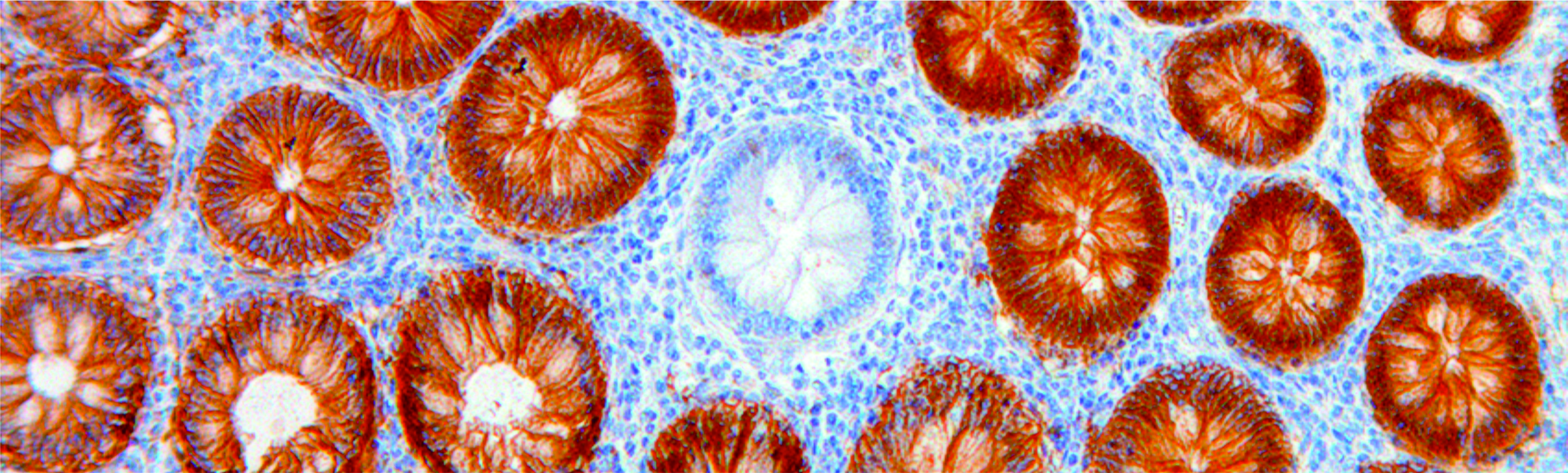
Using MMR-deficient crypt foci (MMR-DCF) as a model of early carcinogenesis, we integrate histopathology, genomics, transcriptomics, spatial biology and computational approaches to investigate how precancerous lesions emerge and evolve. Particular emphasis is placed on identifying early cancer-driving mutations, characterizing immunogenic frameshift neoantigens and understanding interactions between precancerous cells and their immune and microbial microenvironment.
Beyond molecular characterization, DECIPHER investigates the spatial distribution and dynamics of MMR-deficient lesions within normal tissues, as well as the occurrence of early MMR-deficient alterations in extracolonic organs. These complementary approaches aim to better understand the biological mechanisms determining whether early lesions persist, expand, regress or potentially progress towards malignancy.
By bridging fundamental research and translational applications, DECIPHER seeks to identify early biomarkers, preventive therapeutic targets and opportunities for cancer immunoprevention, ultimately contributing to improved cancer prevention strategies for individuals with Lynch syndrome.