
Epigenetic reprogramming as a novel therapeutic strategy for HPV-associated cancer
Persistent infection with high-risk human papillomaviruses (HPV) represents a major cause of multiple malignancies. Despite the availability of preventive vaccines, HPV-associated cancers continue to be a major global health burden, particularly in regions with limited access to screening and healthcare infrastructure. Current treatments largely rely on surgical resection, chemotherapy, and radiotherapy. These therapies often entail substantial and long-term side effects.
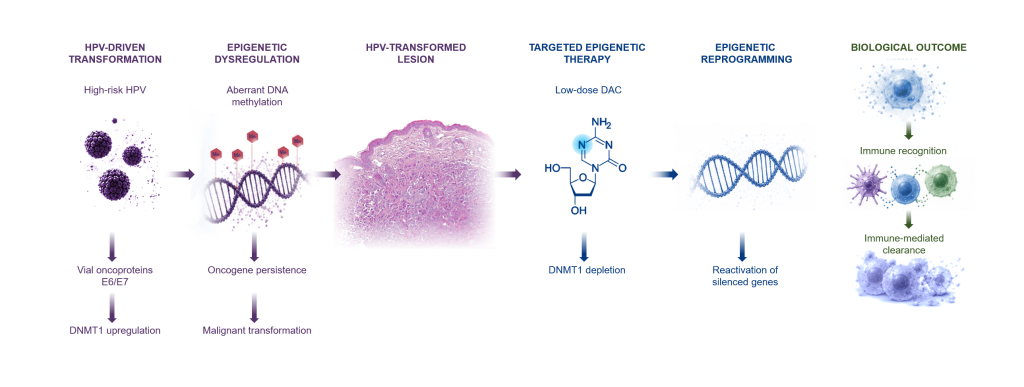
In this project branch, the ATB investigates of a novel therapeutic strategy based on epigenetic reprogramming using the DNA methyltransferase 1 (DNMT1) inhibitor 5-Aza-2’-deoxycytidine (DAC). HPV-driven cancers exhibit profound epigenetic dysregulation, including increased DNMT1 activity, which contributes to sustained viral oncogene expression and thereby promotes malignant transformation and cancer progression.
The aim of this project is to determine whether low-dose DAC treatment can reverse these disease-associated epigenetic alterations, induce a stable senescence-like state in HPV-transformed cells, and enhance immune cell recognition as well as immune-mediated clearance. By combining molecular, transcriptomic, and functional assays in both in vitro and in vivo models, this project evaluates whether therapy-induced senescence may serve as an intermediate therapeutic state enabling immune-mediated tumor elimination and explores the translational potential of epigenetic reprogramming as a novel therapeutic strategy for HPV-transformed cancers.